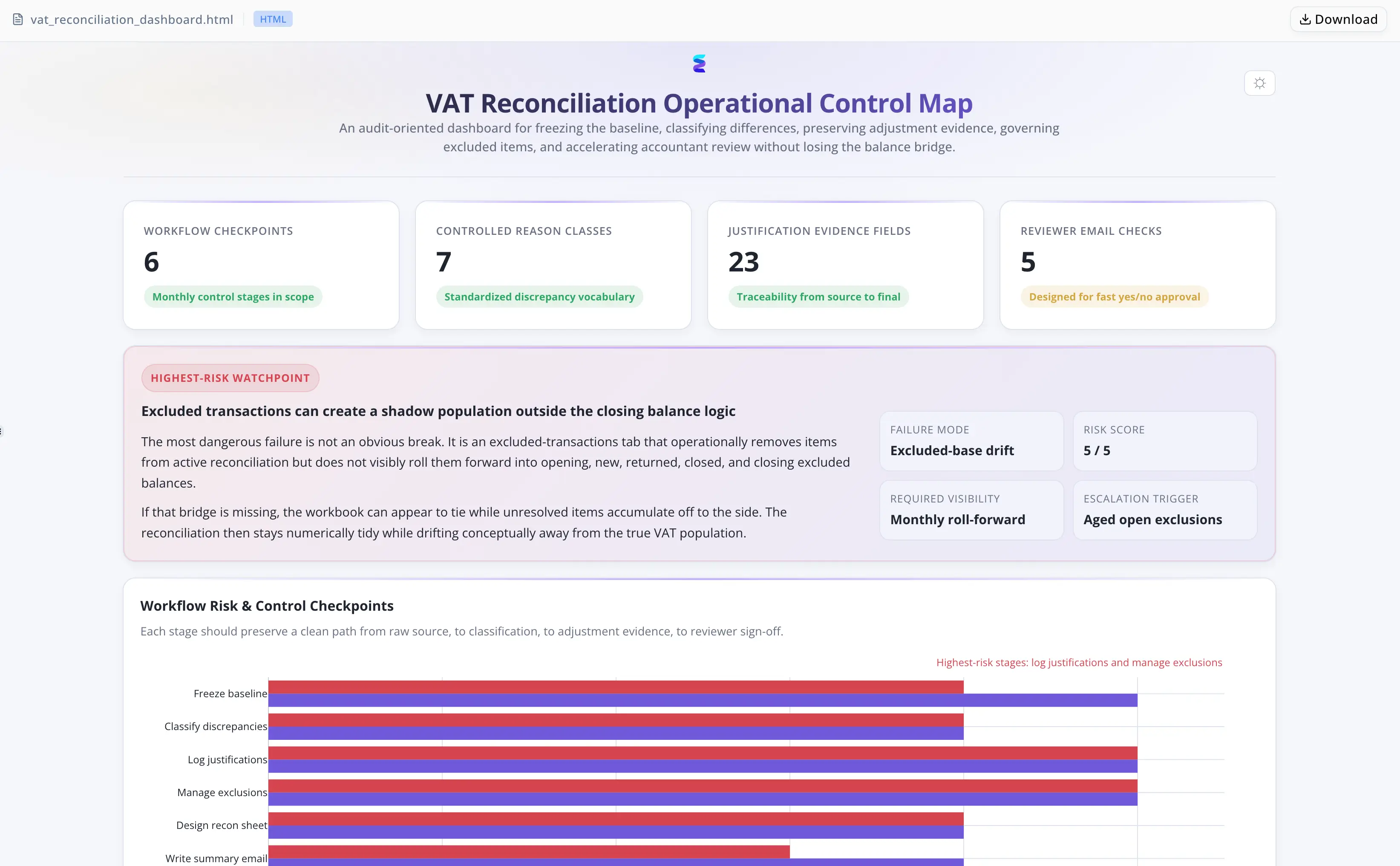
Meridian Finance Group es una firma de servicios financieros de tamaño medio con procedimientos formales de cierre mensual y obligaciones de reporte de VAT. Claire Bennett, Analista Senior de Conciliación, es responsable de todo el ciclo de cierre: datos bancarios, clasificación de discrepancias, ajustes de VAT, documentación de transacciones excluidas y el resumen verificado para la dirección financiera. Los errores aquí —una discrepancia mal codificada, una transacción excluida sin trazabilidad— aparecen semanas después como hallazgos de auditoría.
El paquete de conciliación vivía en la memoria institucional, no en documentos
Se necesitaban cinco artefactos distintos para ejecutar el ciclo de cierre: una guía de referencia mensual independiente, una plantilla de conciliación bancaria, una referencia de conciliación de VAT, una plantilla de registro de justificaciones y una plantilla de correo electrónico de resumen. Ninguno existía en una forma coherente y utilizable.
Los intentos anteriores habían producido libros de trabajo parciales. Pero los códigos de motivo de discrepancia en el registro de justificaciones no coincidían con las categorías de la plantilla de conciliación. La referencia de VAT utilizaba convenciones de nomenclatura de columnas distintas a las de la plantilla bancaria principal. Las inconsistencias generaban fricción en los flujos de aprobación y hacían poco fiables las comparaciones entre periodos.
Convergieron tres presiones: un nuevo miembro del equipo había pasado dos lentos ciclos de cierre aprendiendo decisiones de secuenciación que deberían haber estado documentadas; se acercaba una revisión de auditoría externa y las plantillas desconectadas no eran presentables; y la creciente complejidad del VAT había vuelto inviable el enfoque informal de conciliación.
Energent.ai construyó el paquete completo a partir de un único modelo de datos compartido
En lugar de redactar cinco documentos de forma secuencial, el agente mantuvo en contexto el flujo completo de conciliación y produjo todos los entregables en paralelo:
- Delimitó el conjunto completo de entregables antes de escribir un solo archivo, estableciendo una taxonomía compartida —códigos de motivo, etiquetas de columna, pasos de aprobación— para cada artefacto posterior
- Trasladó las clases de motivo de discrepancia desde la guía de referencia a la plantilla de registro de justificaciones y al panel sin un paso manual de conciliación entre archivos
- Generó un panel HTML directamente a partir del mismo modelo de datos estructurado —cuatro vistas: riesgo del flujo de trabajo y estado de los puntos de control, comparación de clases de motivo de discrepancia, arrastre de transacciones excluidas y lista de verificación de validación del correo electrónico de resumen
- Ejecutó una pasada de verificación independiente sobre los cinco archivos markdown y el panel, identificó una brecha y la resolvió antes de la entrega
Sin comprobación manual de coherencia entre archivos. Sin construcción separada del panel. Sin aprobación verbal de la terminología.

Lógica coherente en todos los artefactos, no solo un formato más limpio
- Modelo de datos compartido como fuente de verdad — los códigos de motivo, las etiquetas de columna y los pasos de aprobación se definieron una sola vez y se propagaron simultáneamente a los cinco entregables y al panel.
- Producción en paralelo, no redacción secuencial — los entregables escritos y la visualización avanzaron como flujos concurrentes, preservando la coherencia interna que la redacción secuencial rompe habitualmente.
- Verificación independiente antes de la entrega — una etapa deliberada comprobó brechas entre la guía de referencia y las plantillas, inconsistencias terminológicas y pasos de aprobación ausentes en todo el paquete.
- Resultados listos para desplegar de inmediato — la plantilla de registro de justificaciones, con clases de motivo precargadas, se incorporó directamente al siguiente cierre de fin de mes sin modificaciones.
Un backlog de cinco archivos resuelto en una sola sesión
- Cinco entregables reutilizables producidos en una sola sesión, cada uno coherente con los demás y listo para el siguiente cierre de fin de mes.
- Un panel HTML que cubre las cuatro vistas de puntos de control de control, sin necesidad de herramientas adicionales para desplegarlo.
- Una brecha detectada y resuelta durante la pasada de verificación independiente antes de que la analista revisara el resultado final.
- Referencia de incorporación completa — la documentación estructurada sobre trampas, compensaciones y secuenciación ofreció al nuevo miembro del equipo una guía para el primer ciclo de cierre en solitario.

"La referencia de conciliación de VAT nos dio la primera vista estructurada de los puntos de control de VAT con la que habíamos operado. El registro de justificaciones pasó directamente al siguiente paquete de cierre sin una sola edición. Por fin tenemos un proceso que vive en documentos, no en la cabeza de nadie." — Claire Bennett, Analista Senior de Conciliación en Meridian Finance Group