Meridian Capital Advisory es una práctica de asesoría de M&A de tamaño medio dentro de una firma de consultoría de gestión, que da soporte a operaciones buy-side y sell-side en los sectores industrial y de servicios sanitarios. Los consultores senior y dos o tres asociados gestionan múltiples operaciones activas en paralelo, cada una con su propio calendario de diligencia y estructura de operación. Los socios exigen que las hojas resumen dirigidas al cliente sigan un formato predecible que los revisores puedan escanear rápidamente, independientemente de qué asociado la haya elaborado.
Una sola plantilla que se rompía silenciosamente en ocho tipos de operación
El flujo de operaciones de la firma abarca tres dimensiones binarias: tipo de contraprestación (efectivo vs. acciones), perfil del comprador (estratégico vs. financiero) y estado de cotización del objetivo (público vs. privado). En conjunto, esto da lugar a ocho configuraciones distintas con requisitos de modelización significativamente diferentes: una compra apalancada de una empresa privada por parte de un patrocinador financiero requiere métricas principales totalmente distintas de una fusión de acciones por acciones entre dos estratégicos cotizados.
La práctica había mantenido una única plantilla de modelo de fusión diseñada para la operación mediana, una que se rompía silenciosamente en los extremos. Los asociados añadían secciones a medida operación por operación, lo que generaba diseños de hoja resumen inconsistentes para operaciones estructuralmente similares. Los revisores dedicaban un tiempo desproporcionado a reabrir decisiones de ubicación durante los controles internos de calidad, en lugar de centrarse en el contenido del análisis. Las trampas de modelización conocidas —sinergias mal clasificadas, tratamiento inconsistente del número de acciones en operaciones con acciones, primas faltantes para objetivos cotizados— existían solo en la memoria institucional, nunca catalogadas, clasificadas por gravedad ni vinculadas a configuraciones específicas.
Energent.ai sustituyó el ciclo de rediseño por operación
En una sola sesión de trabajo, el agente produjo cuatro entregables interconectados a partir de una única entrada estructurada:
- Enumeró las ocho configuraciones de operación a partir de las tres dimensiones binarias y utilizó esa matriz como base de todo el resultado posterior
- Generó un registro estructurado de trampas: trampas de modelización catalogadas por categoría temática, cada una con una calificación de gravedad y vinculada a las configuraciones en las que aplica (trampas de tratamiento del número de acciones delimitadas a operaciones con acciones; trampas de prima para objetivos cotizados limitadas solo a transacciones con objetivo cotizado)
- Produjo un marco explícito de ubicación: cada entrada, salida y sensibilidad del modelo se asignó a la hoja resumen o al modelo de soporte en todas las dimensiones de tipo de operación, con una justificación escrita incorporada en cada decisión
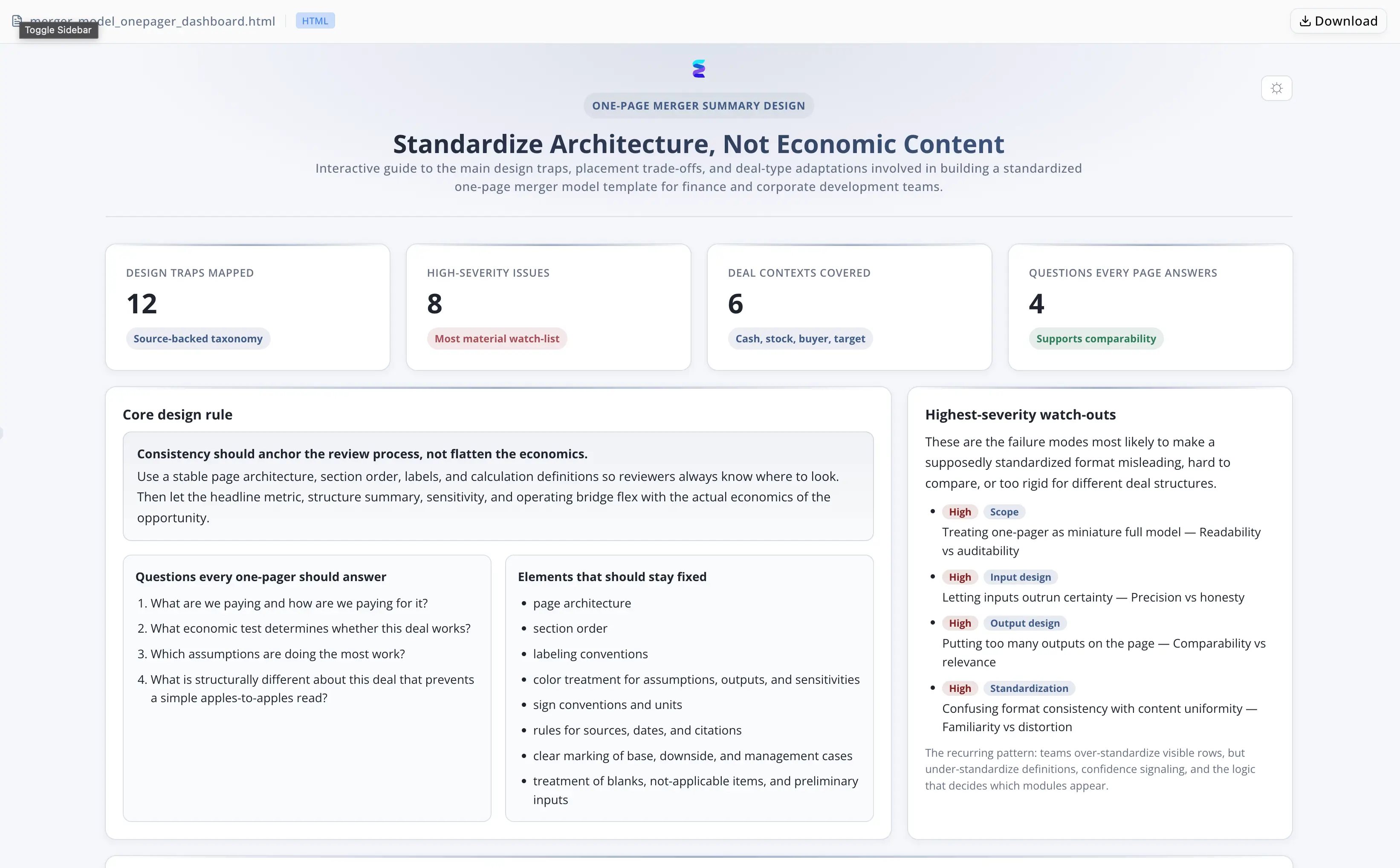
- Construyó un panel HTML interactivo que muestra la distribución de gravedad de las trampas, los desgloses temáticos y la aplicabilidad según el contexto de la operación en las ocho configuraciones; funciona en cualquier navegador, sin necesidad de software
Sin proyecto interno de rediseño de varias semanas. Sin artefactos separados ensamblados en distintos plazos. Sin una wiki estática que se desvía de la práctica a medida que evolucionan las operaciones.

Justificación por escrito, no solo un formato más pulido
- Calificaciones de gravedad conscientes de la configuración — cada trampa se etiqueta según los tipos de operación en los que aplica; una trampa exclusiva de operaciones en efectivo no aparece en una lista de verificación para operaciones con acciones
- Lógica de ubicación pre-resuelta — el marco incluye una justificación explícita para cada decisión, de modo que los revisores la citan en lugar de volver a discutir la pregunta de fondo durante las revisiones del modelo
- Coherencia en una sola sesión — el registro de trampas, el marco de ubicación y el panel se basan en los mismos datos estructurados, evitando contradicciones entre artefactos
- Salida nativa del navegador — el panel HTML no requiere instalación de BI y puede regenerarse en una sesión posterior actualizando la entrada de datos estructurados
Cómo Meridian Capital Advisory lo utiliza en el día a día
- Los nuevos asociados reciben el marco de ubicación y el registro de trampas el primer día de cada nueva operación.
- Antes de enviar un modelo a revisión, los asociados contrastan el registro de trampas con calificación de gravedad con la configuración específica de la operación; por ejemplo, contraprestación en acciones más objetivo cotizado.
- Los socios citan el marco de ubicación al dar feedback; las decisiones de diseño ya están resueltas por escrito en lugar de debatirse durante la sesión de revisión.
Ocho configuraciones cubiertas, una categoría de comentario de revisión eliminada
- Un marco coherente que cubre las ocho configuraciones de operación, sustituyendo una única hoja resumen indiferenciada que se rompía en los extremos
- Un registro de trampas con calificación de gravedad organizado por categoría temática, mapeado en las ocho configuraciones y distribuido a los asociados como una lista de verificación estructurada previa al envío
- Un panel HTML interactivo que cubre la distribución de gravedad de las trampas, los desgloses temáticos y la aplicabilidad según la configuración de la operación, producido en la misma sesión que todos los entregables escritos
- Los debates sobre la ubicación por operación se eliminaron de las revisiones internas de calidad; los errores de modelización comunes ahora los detectan los asociados antes de llegar por primera vez al nivel de socio

"Los asociados lo consultan directamente; los socios lo citan al dar feedback. Eliminó toda una categoría de comentario de revisión." — James Whitmore, Consultor Senior en Meridian Capital Advisory