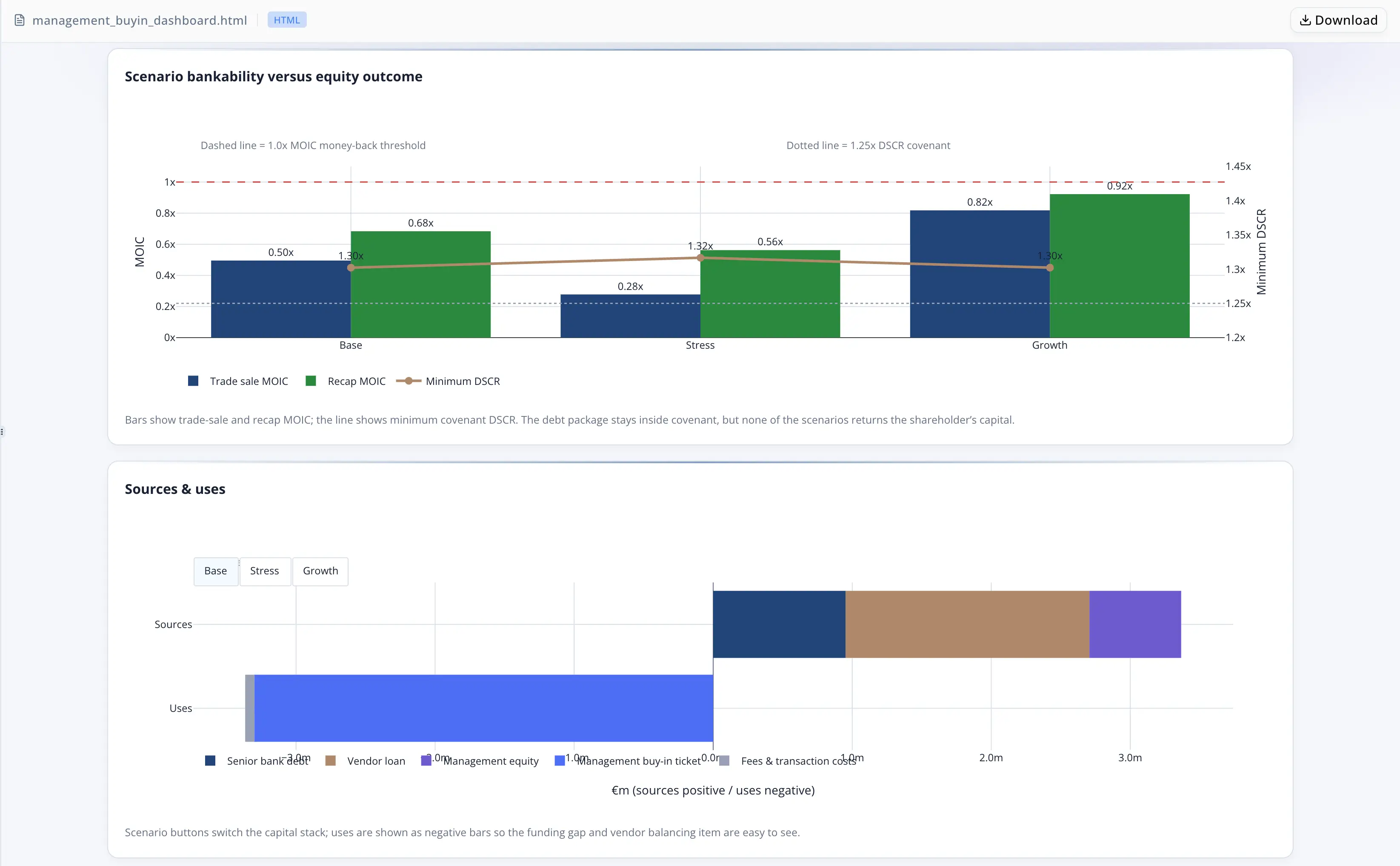
Meridian Capital Partners gestiona entre ocho y doce procesos de transacción al año, y las management buy-ins representan una parte cada vez mayor del volumen. El equipo de operaciones es reducido, y Joris se encarga de toda la metodología de financiación en cada MBI: obtener y validar los datos de tasas, dimensionar los tramos de deuda y documentar los supuestos fiscales y de covenants que sustentan el análisis de rentabilidad. Los inputs no respaldados o los precios desactualizados harán que el modelo vuelva del IC para su revisión.
Dos dependencias secuenciales frenaban cada sesión de financiación MBI
Construir un modelo de debt-stack defendible requería resolver dos dependencias bloqueantes en un orden estricto.
Primero, había que inspeccionar los datos de tasas serie por serie: confirmar la cobertura de fechas, verificar la estructura de los campos y comprobar si las observaciones más recientes estaban desactualizadas. Un endpoint desactualizado genera un ancla de precios engañosa; la única forma de saberlo es leer los archivos. La auditoría manual era lenta y no generaba ningún artefacto estructurado apto para el memo del IC o el paquete para el prestamista.
Segundo, el conjunto de supuestos fiscales y de covenants — tasa impositiva efectiva, umbrales del PIK toggle, niveles de covenant DSCR — no puede derivarse de los archivos de tasas. Requería un paso de resolución aparte que solo podía comenzar una vez completada la validación de tasas. Una sesión de metodología de financiación consumía habitualmente la mayor parte de una jornada laboral.
Energent.ai ejecutó ambos pasos bloqueantes sin salir de la herramienta
El analista cargó el conjunto de datos de tasas y los archivos de referencia. El agente ejecutó todo el flujo secuencial en una sola sesión:
- Inventarió qué series de tasas estaban presentes y las mapeó a los anclajes de precios del modelo
- Inspeccionó cada serie en busca de cobertura de fechas, estructura de campos y consistencia entre archivos
- Marcó los endpoints de cobertura en los que la brecha en la observación más reciente sugería desactualización
- Produjo un resumen consolidado de cobertura de tasas — series actuales, brechas y anclajes fiables en un único artefacto documentado
- Resolvió el conjunto de supuestos fiscales y de covenants una vez despejados los datos de tasas, capturando la tasa impositiva efectiva, los umbrales de DSCR y los disparadores del PIK toggle en formato estructurado y auditable
Sin auditoría manual en Excel. Sin sesión de seguimiento aparte. Sin cambio de contexto entre la validación de tasas y la documentación de supuestos.

Aplicación programática, no aproximación manual
- Las comprobaciones de cobertura se ejecutaron en código. El agente validó los rangos de fechas y la estructura de campos en Python inline — una aplicación sistemática que el proceso manual no podía replicar.
- La desactualización salió a la luz antes de fijar los anclajes. Las comprobaciones de los endpoints de cobertura detectaron series desactualizadas al inicio de la sesión, no después de que el modelo ya se hubiera construido sobre ellas.
- La documentación estructurada se produjo como subproducto. El resumen de cobertura de tasas y el conjunto de supuestos salieron formateados para el memo del IC — artefactos que el proceso manual nunca generaba.
- El contexto se mantuvo intacto entre ambos pasos. Ambas dependencias se resolvieron en una sola sesión; el analista nunca tuvo que reconstruir el contexto de trabajo a la mañana siguiente.
Cómo lo usa Joris en el día a día
- Cargar el conjunto de datos de tasas y los archivos de referencia al inicio de la sesión MBI.
- Revisar el inventario de series y las alertas de cobertura del agente antes de fijar cualquier anclaje de precios.
- Guiar al agente a través del conjunto de supuestos fiscales y de covenants, aportando la estructura de la operación y el contexto jurisdiccional.
- Exportar el resumen de cobertura de tasas y la documentación de supuestos al memo del IC o al paquete para el prestamista.
Un flujo de trabajo de dos fases reducido a una sola sesión
- Ambas dependencias bloqueantes se resolvieron sin una pausa de sesión. La validación de tasas y la documentación de supuestos — antes separadas por horas o por una noche — se completaron en una sola sesión continua.
- El riesgo de series desactualizadas salió a la luz antes de finalizar los anclajes. Las comprobaciones de cobertura se ejecutaron al inicio de la sesión, no como una ocurrencia tardía.
- Documentación lista para el IC producida el mismo día en que se inspeccionaron los datos.
- La metodología de financiación quedó finalizada con inputs validados y documentados — el modelo quedó listo para ejecutarse esa misma tarde.

"Ambas dependencias resueltas en una sola sesión — eso era lo importante. No tuve que volver a la mañana siguiente con el contexto desactualizado y retomar donde lo había dejado. El modelo quedó listo para ejecutarse esa misma tarde." — Joris Vandenberghe, Senior Analyst at Meridian Capital Partners