Clearview Advisory Group es una firma estadounidense de estrategia y asesoría financiera que presta servicios a clientes de mercado medio en planificación plurianual y asignación de capital. Los proyectos requieren modelos de previsión basados en la realidad macroeconómica actual: documentos pensados para CFOs y miembros del consejo. James Merritt lidera el modelado cuantitativo en las distintas cuentas de clientes.
Tres conjuntos de datos gubernamentales, sin capa de consolidación
El entregable era una plantilla de previsión financiera a 3 años anclada en referencias macroeconómicas estadounidenses en tiempo real: CPI, crecimiento real del PIB y tipos de interés. Los datos macro residían en archivos CSV separados publicados por organismos gubernamentales. Para construir la línea base, Merritt necesitaba extraer las filas posteriores a 2020 de cada archivo, calcular las tasas de crecimiento interanual para CPI y PIB real, y fusionar las tres series en una única tabla coherente antes de poder empezar cualquier trabajo orientado al cliente.
El entorno posterior a 2020 añadió una complejidad no lineal: el repunte de la inflación, el ciclo de subidas de tipos de la Reserva Federal más agresivo en cuatro décadas y las oscilaciones del PIB, desde una contracción brusca hasta una recuperación sólida, significaban que las hipótesis de línea plana o las extensiones de tendencia anteriores a 2020 producirían una línea base materialmente engañosa. Un anclaje en datos actuales era innegociable. Hecho manualmente, este ejercicio de alineación consume varias horas antes incluso de empezar la plantilla de previsión.
Energent.ai se convirtió en el motor de consolidación
Merritt cargó directamente los tres CSV macroeconómicos en Energent.ai. El agente se encargó de todo el flujo:
- Analizó y validó los tres conjuntos de datos cargados antes de continuar
- Ejecutó Python para extraer las lecturas más recientes posteriores a 2020 de cada archivo
- Calculó las tasas de crecimiento interanual para CPI y PIB real, y luego fusionó las tres series en un único CSV consolidado
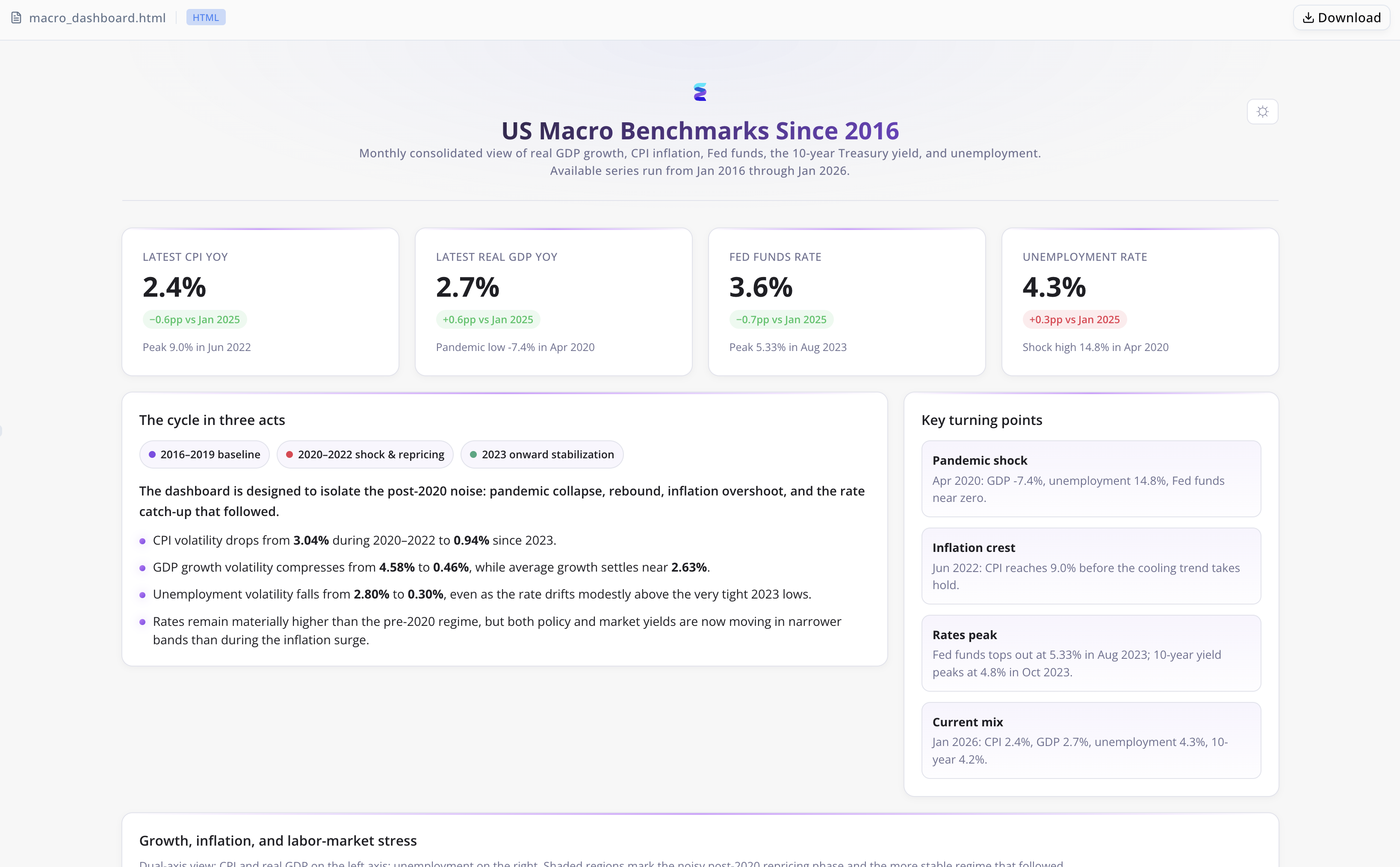
- Delegó la generación del dashboard a un subagente, produciendo un gráfico interactivo superpuesto que cubría el repunte de la inflación, el ciclo de subidas de tipos y la volatilidad del PIB en una línea temporal unificada
- Redactó una plantilla de previsión estructurada en markdown a 3 años con cifras base, tablas de tasas interanuales y un esqueleto de proyección a tres años
- Verificó la estructura de los archivos y la integridad del renderizado antes de la entrega final
Sin fusiones manuales. Sin reescritura de fórmulas. Sin herramienta de gráficos aparte.
Datos conscientes del régimen, no solo informes más bonitos
- Cálculo real sobre archivos reales. El agente ejecutó Python sobre los CSV cargados de verdad, no sobre datos de ejemplo. Las tasas de crecimiento interanual se obtuvieron a partir de las lecturas de origen, no de aproximaciones.
- Cobertura posterior a 2020 por defecto. Se extrajeron filas posteriores a 2020 en las tres series, capturando los cambios de régimen que hacen que las previsiones del periodo actual sean materialmente distintas de las extrapolaciones anteriores a 2020.
- Una sola sesión, pila completa. La ingesta, la consolidación, la visualización y la redacción de la plantilla se ejecutaron de forma secuencial dentro de una sola sesión. El dashboard y la plantilla partieron de la misma línea base consolidada.
- Flexibilidad de formato. Se manejaron archivos de distintas fuentes gubernamentales con estructuras de columnas diferentes sin preprocesamiento manual.
Cómo lo ejecuta James Merritt
- Cargue los tres archivos CSV macroeconómicos en la sesión de Energent.ai.
- El agente extrae las lecturas del periodo actual y calcula las tasas de crecimiento interanual.
- Se genera el CSV consolidado y queda disponible para descarga.
- Un subagente produce el dashboard interactivo superpuesto.
- Se redacta y verifica la plantilla de previsión estructurada en markdown.
- Ambos archivos se descargan para su entrega al cliente.

Tres entregables listos para el cliente, una sola sesión
- Línea base macro consolidada: un único CSV que combina las lecturas de CPI, PIB real y tipos de interés — las tasas de crecimiento interanual se calculan para CPI y PIB real, y los tipos de interés se mantienen como lecturas de nivel
- Dashboard interactivo superpuesto: un gráfico unificado que cubre los regímenes posteriores a 2020 — legible para una audiencia financiera no especializada
- Plantilla de previsión estructurada: un documento markdown formateado con cifras base, tablas de tasas interanuales y un esqueleto de proyección a tres años, listo para su entrega al cliente
Un trabajo que habría consumido varias horas de ensamblaje manual de datos a partir de tres archivos gubernamentales separados se completó en una sola sesión de trabajo.

"La plantilla pasó directamente al equipo de CFO del cliente como el documento de trabajo para el ciclo de planificación plurianual. Ese es el nivel exigido — lo bastante bueno para que un equipo de CFO lo use directamente. Lo fue." — James Merritt, Consultor sénior de estrategia en Clearview Advisory Group