Cascade Capital Advisors es una firma de inversión de mercado medio donde los analistas se encargan de modelos operativos de DCF a cinco años de principio a fin. El equipo de Mercer obtiene datos financieros de las presentaciones SEC EDGAR y entrega workbooks de Excel con resultados de NPV e IRR a los comités de inversión, cada vez más con plazos de 48 horas.
Las búsquedas taxonómicas de varias horas precedían cada construcción de modelo 10-K
Cada nuevo modelo de presentación empezaba igual: descargar el JSON de company-facts de la SEC, abrir una plantilla en blanco y pasar varias horas emparejando manualmente las etiquetas taxonómicas de EDGAR con seis categorías de modelado: revenue, EBIT, D&A, capex, effective tax rate y working capital. D&A aparecía en el estado de resultados, el estado de flujos de efectivo y las notas complementarias — a menudo de forma redundante. Capex requería confirmar que la etiqueta excluía el gasto relacionado con adquisiciones.
El cuello de botella recaía en los analistas senior. Determinar qué etiquetas de EDGAR eran económicamente utilizables requería un juicio específico de cada presentación que los miembros junior del equipo no podían aportar. Los plazos de los deals se comprimieron de una semana a 48 horas. La temporada de resultados significaba que varias presentaciones llegaban en la misma semana. El enfoque manual no escalaba.
Energent.ai se convirtió en la capa de datos previa al modelo
El analista carga el JSON bruto de company-facts de la SEC — sin conversión de formato, sin preprocesamiento. El agente cubre cinco pasos estructurados en una sola sesión:
- Auditó el esquema y la cobertura — confirmó los años fiscales disponibles y señaló las lagunas históricas antes de cualquier compromiso de modelado
- Mapeó la taxonomía en las seis categorías, identificando etiquetas candidatas y evaluando su cobertura a lo largo de los periodos de reporte
- Clasificó los impulsores operativos — separó las partidas utilizables de las etiquetas ausentes o económicamente engañosas
- Identificó dos arquitecturas viables de UFCF con compensaciones explícitas basadas en la cobertura real de la presentación
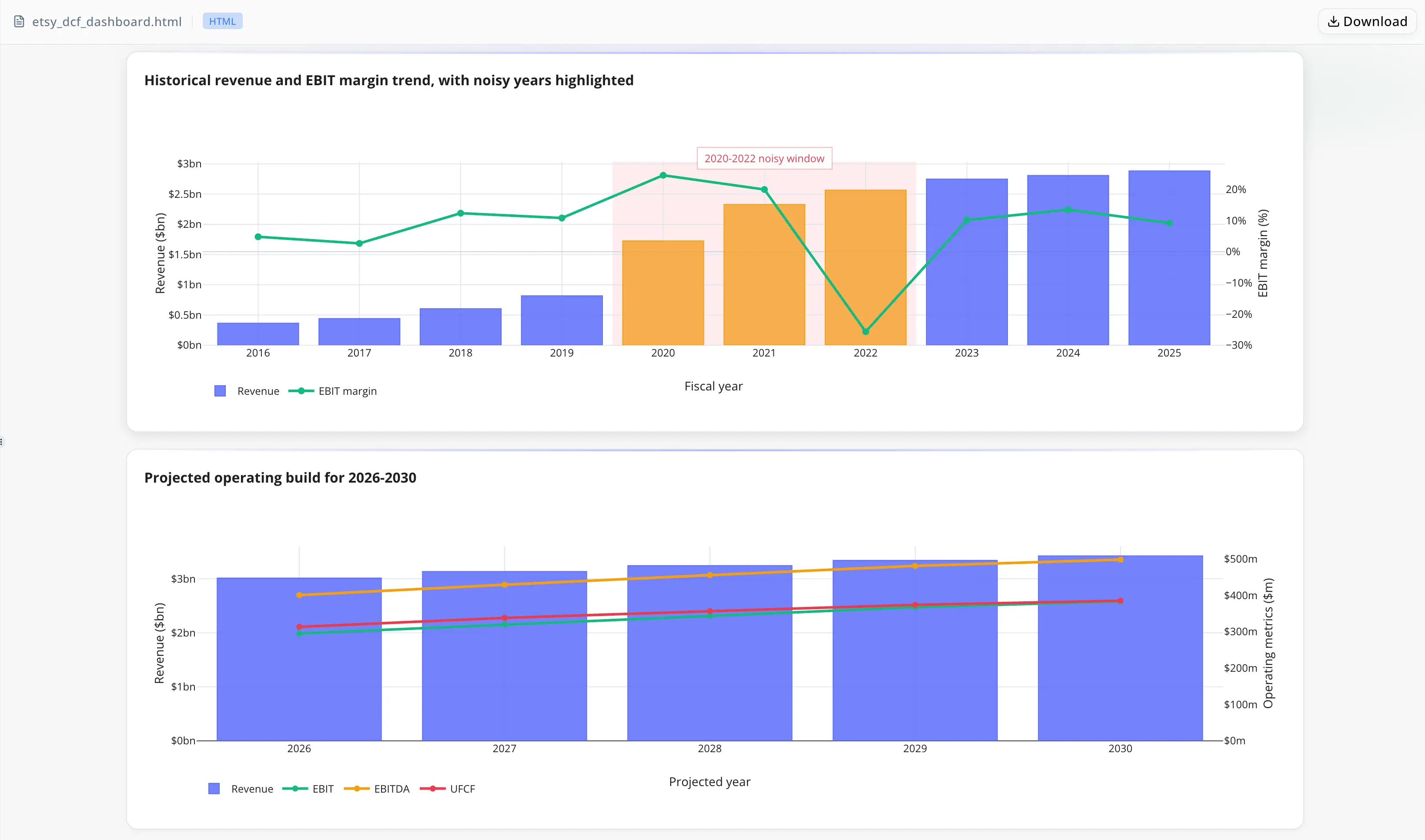
- Construyó el workbook de Excel — pronóstico operativo a cinco años, waterfall de UFCF, resultados de NPV e IRR, y visualizaciones listas para el comité
Sin búsqueda manual de etiquetas. Sin abrir una plantilla antes de entender los datos. Sin posponer la decisión de arquitectura hasta la población de celdas.

La decisión de arquitectura primero, con compensaciones específicas de la presentación hechas explícitas
- Dos rutas de construcción de UFCF antes de cualquier resultado. El agente identificó arquitecturas en competencia adaptadas a lo que esta 10-K específica realmente reportaba — no a una plantilla genérica — de modo que la elección estructural se hizo antes de poblar una sola celda.
- Análisis cruzado de estados simultáneo. Revenue, EBIT, D&A, capex, taxes y working capital evaluados en una sola pasada, cruzando el estado de resultados, el balance y el estado de flujos de efectivo para detectar vacíos y solapamientos.
- Señales explícitas sobre etiquetas engañosas. Las etiquetas ausentes de cambio en working capital y las partidas de capex que incluían adquisiciones aparecieron antes de llegar a una celda, no se descubrieron en la conciliación posterior.
- Capacidad senior redirigida al juicio. El punto de decisión de arquitectura llegó como una decisión estructurada con las compensaciones ya articuladas — de modo que el tiempo del analista se aplicó a la selección y al establecimiento de supuestos, no a la manipulación de datos.
Cómo David Mercer lo usa en el día a día
- Cargar el JSON de company-facts de la SEC en la sesión de Energent.ai.
- Revisar la auditoría del esquema y la cobertura; confirmar los años de modelado y cualquier laguna histórica.
- Evaluar las dos opciones de arquitectura de UFCF frente al uso previsto del modelo.
- Seleccionar una arquitectura; el agente construye el pronóstico a cinco años, el waterfall de UFCF y los resultados de DCF en Excel.
- Revisar los resultados de NPV e IRR para comprobar la coherencia de los supuestos antes de la presentación al comité.
El mapeo taxonómico pasó de una tarea de varias horas a una sola sesión
- Las seis categorías de modelado se mapearon en una sola sesión a partir del JSON bruto — eliminando la búsqueda manual de taxonomía que precedía cada nueva construcción de modelo a partir de una presentación.
- Se mostraron dos arquitecturas viables de UFCF con sus compensaciones antes de que el analista tocara una plantilla.
- El punto de decisión de arquitectura se alcanzó antes de poblar cualquier celda, eliminando el riesgo oculto de conciliación que solo aparecía a mitad de las construcciones manuales.
- El workbook final de Excel incluyó un modelo de DCF estructurado con resultados de NPV e IRR junto con visualizaciones listas para el comité.

"El mapa taxonómico que produjo el agente — etiquetas cubiertas, etiquetas ausentes, elementos señalados en las seis categorías — reemplazó la lista mental de verificación que usaba para construir a partir de años de exposición a EDGAR. Ahora es el documento de trabajo para la discusión de arquitectura antes de construir nada." — David Mercer, Analista Senior en Cascade Capital Advisors